
Collecting coins provides people with a very interesting hobby. This hobby requires a lot of patience and attention to small details on the surface of metal money.
The 1970 D penny value represents a very common coin. The United States Mint in Denver produced it during a time of high economic activity.
Millions of these copper coins entered circulation in the early seventies. People find them very easily in old glass jars or pockets today.
Most people see a 1970-D penny and think about its face value of one cent. Professional collectors look for specific marks. These marks change the price significantly.
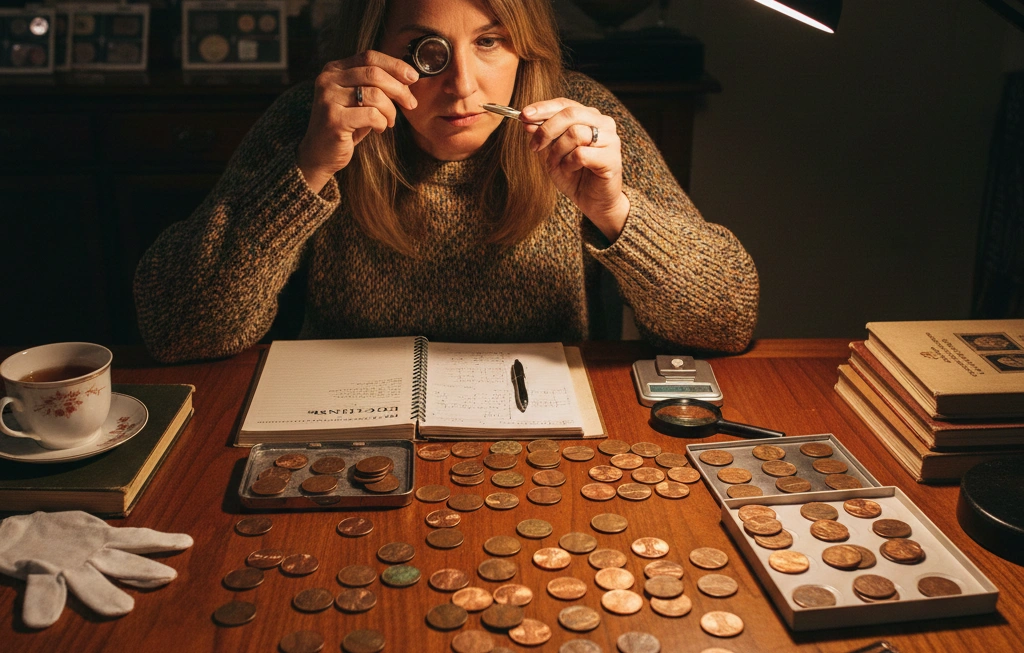
Understanding the history of the Denver Mint helps collectors. They realize why so many coins exist from this specific year and location.
The Denver Mint used a small letter D located under the date. This letter shows the origin of the coin and helps people identify the place of production.
Many factors determine the final price of a 1970-D penny. These factors include the physical condition and the presence of rare minting mistakes.
Feature | Description |
Composition | 95% Copper, 5% Zinc |
Weight | 3.11 Grams |
Diameter | 19.05 mm |
Mint Mark | D (Denver) |
Edge | Plain |
The United States Mint followed strict rules during the production of these coins. The workers ensured a weight of exactly three point eleven grams for every single piece.
Using a mixture of copper and zinc provided the coins with a bright red color. The metal slowly turns brown after it passes through many human hands.
Collectors prefer coins in their original red state. They avoid the natural process of oxidation. Oxygen and moisture in the air cause this process.
Finding a 1970-D penny in perfect condition feels difficult. Most coins spent years moving between banks, shops, and vending machines.
The Importance of the Mint Mark
The small letter D sits below the year 1970. It serves as the primary identifier for coins from the Colorado facility.
Denver produced over two billion pennies in 1970. The mint created a huge supply of coins for daily commerce across the entire country.
Having such a large number of coins usually keeps the price very low. The value stays at only one cent for coins with heavy wear.
However, some 1970-D pennies possess unique characteristics. These features make them much more valuable than a standard coin from a grocery store.
Professional grading companies examine these coins under microscopes. The experts look for tiny scratches or marks. Such marks reduce the overall quality of the metal.
A coin receives a high grade from a company like PCGS or a coin identifier app. Such a coin can sell for hundreds of dollars at a public auction.
Investors buy these high-grade coins and hope for a price increase over time. They treat the pennies as a physical asset for their financial future.
Mint Location | Mint Mark | Production Count |
Philadelphia | None | 1,898,315,000 |
Denver | D | 2,891,438,900 |
San Francisco | S | 690,510,704 |
The Denver Mint outperformed the Philadelphia Mint in 1970. It produced nearly three billion units to satisfy the growing demand for small change.
Philadelphia coins do not have a mint mark. They appear plain and simple compared to the coins from the western part of the United States.
The San Francisco Mint produced a much smaller number of coins. It made the famous Small Date and Large Date varieties. These coins created a lot of excitement.
The 1970-S penny often gets more attention from the media. The 1970-D penny remains a staple for people. These people complete their Lincoln Memorial folders.
Completing a full set of pennies requires finding every date and mint mark. This task forces collectors to hunt for the best possible 1970-D example.
Searching through thousands of coins takes a lot of time. This search for a 1970-D penny in uncirculated condition offers a great sense of satisfaction.
Many 1970-D pennies stayed in original paper rolls. These rolls protected them from the scratches and dirt of daily life.
Identifying the Small Date vs. Large Date Confusion
Many new collectors confuse the 1970-D penny with the rare 1970-S Small Date variety. This leads to many questions about the true value of their find.
The 1970-D penny only has one main design for the date. It lacks the rare Small Date version from the San Francisco Mint.
Looking at the number seven in the date helps people. They distinguish between the different styles of the engravers at the mint.
On a Small Date coin, the top of the seven sits level with the top of the zero and the nine. This creates a straight line across the numbers.
On a Large Date coin, the seven sits slightly lower than the other numbers. You can see this easily with a simple magnifying glass.
Many beginners believe they found a rare 1970-D Small Date penny. They feel disappointed after learning the truth about the Denver Mint varieties.
The 1970-D penny lacks the Small Date variety. It still holds value for people. These people focus on high-quality strikes and errors.
Errors and Varieties of the 1970-D Penny
Errors during the production process create rare coins. These mistakes attract people. They are willing to pay a premium for unique items.
Double Die Obverse: This error happens during the hitting of the coin. The die has a double image. It causes the letters and numbers to look blurry or repeated.
Off-Center Strikes: A machine fails to center the coin correctly. It produces a penny with part of the design missing. This penny shows only a blank piece of copper.
Repunched Mint Mark: Workers sometimes hit the D letter twice. This action creates a second visible mark. It slightly overlaps the first one.
Die Cracks: The metal dies break under pressure. They leave raised lines on the coin. These lines show the age and wear of the minting equipment.
Finding a 1970-D penny with a significant error can increase its value. The price goes from one cent to over fifty dollars. It depends on the visibility of the mistake.
Professional collectors enjoy the study of these errors. They use them to understand the mechanical failures inside the United States Mint.
Each error tells a story about a specific moment in 1970. It represents a mistake. This mistake survived the quality control checks of the government workers.
Checking every 1970-D penny with a coin value checker app allows people to find treasures. They find them before spending the money at a store.
Grading the 1970-D Penny
Grading involves a seventy-point scale. Experts use it to describe the physical state of a coin after many years of existence.
Good (G-4): The coin shows heavy wear. The main design is still visible but it lacks any fine details on Lincoln's hair or coat.
Fine (F-12): Most details appear clear. The coin shows some flatness on the high points caused by circulation.
Extremely Fine (EF-40): The coin looks very clean. It possesses only minor wear on the highest parts of the design, like the cheek and ears.
Uncirculated (MS-60): This coin never entered daily use. It keeps its original shine but has some small marks from other coins in bags.
Gem Uncirculated (MS-65): This is a nearly perfect coin. It has a strong strike and very few marks. It looks exactly like it did on the day of production.
The value of a 1970-D penny at a grade of MS-67 or higher can reach thousands of dollars. This represents the top tier of coin collecting.
Very few 1970-D pennies survive in such a perfect state. They are the target of wealthy investors. These investors compete at high-end auctions.
Owning a certified 1970-D penny in a plastic holder protects the metal. This ensures the grade stays the same forever.
Grade | Estimated Value |
Circulated (G to EF) | $0.01 - $0.05 |
Uncirculated (MS-63) | $0.20 - $1.00 |
Gem Uncirculated (MS-65) | $10.00 - $25.00 |
Superb Gem (MS-67) | $150.00 - $500.00 |
Auction Record (MS-67+) | $2,000+ |
Selling a common 1970-D penny usually brings no profit. The cost of shipping exceeds the value of the single cent.
People want to make money from their coins. They focus on finding rolls of uncirculated pennies. They hope to find one perfect example for grading.
The market for 1970-D pennies remains stable. It shows consistent interest from collectors of 20th-century American coins.
Economic changes rarely affect the price of low-grade pennies. The demand for high-grade coins fluctuates based on the number of active collectors.
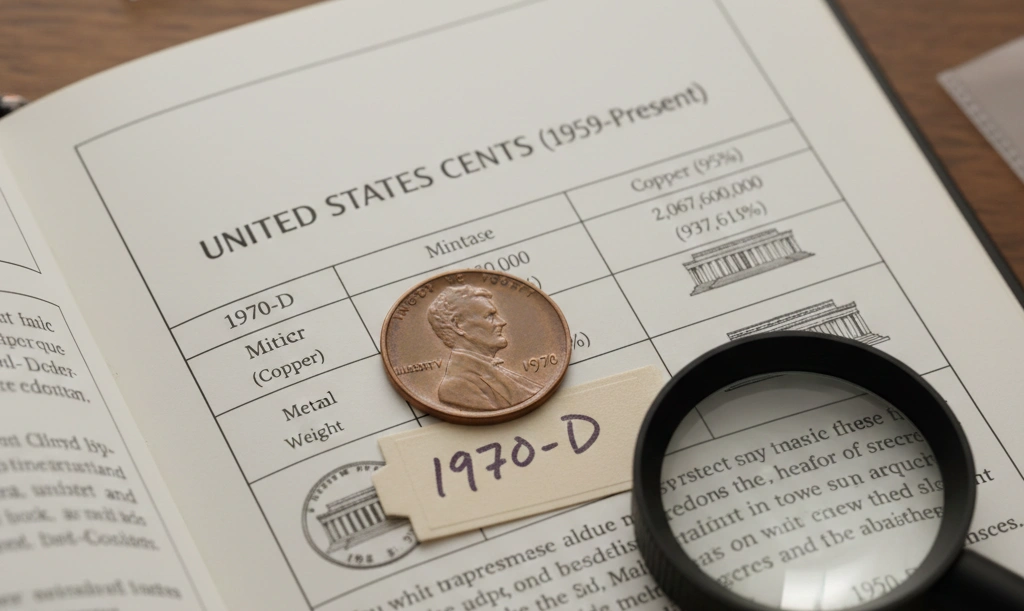
Joining a coin club or visiting a local coin shop helps people. They learn the current prices. This prevents them from selling a valuable coin for too little money.
Using online auction sites allows collectors to see real-time sales. This provides a clear picture of what people pay for a 1970-D penny.
How to Store Your 1970-D Pennies
Protecting your coins from the environment prevents the copper from turning black. It stops the development of ugly green spots called verdigris.
Storing coins in a cool and dry place helps maintain the original color. This keeps the value as high as possible for future sales.
Coin Flips: These are small plastic squares. They hold the coin safely and allow you to see both sides without touching the metal.
Coin Tubes: These are plastic cylinders. They hold up to fifty pennies. They are perfect for storing large quantities of uncirculated coins.
Albums: These are specialized folders with slots for every year and mint mark. They provide an easy way to organize a growing collection.
Slabs: These are hard plastic holders from grading companies. They offer the best protection and a guaranteed grade for the coin.
Avoid using cheap plastic with PVC. This chemical reacts with copper and creates a sticky film. This film damages the coin's surface.
Handling coins by the edges prevents oils from your skin from leaving fingerprints. These fingerprints stay on the face of Abraham Lincoln forever.
Using cotton gloves offers another layer of protection. This ensures the coin remains in the same condition as the day you found it.